
What is a holding pattern?
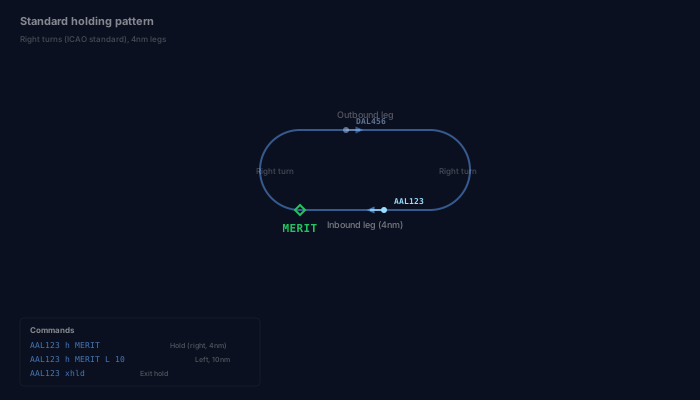
A holding pattern is a racetrack-shaped path flown at a specific waypoint. Controllers use them to delay aircraft when there's too much traffic for the available airspace or runway capacity.
How it works
The aircraft flies to the holding fix, turns outbound for a set distance (typically 4nm or 1 minute), turns back, and flies inbound to the fix again. This repeats until the controller clears the aircraft to continue.
Standard holds use right turns. Left turns are assigned when terrain, airspace, or traffic flow requires it.
When controllers use holds
- Arrival demand exceeds runway capacity
- Weather closes an airport temporarily
- A runway is blocked (disabled aircraft, emergency)
- Traffic sequencing requires spacing
Expected further clearance (EFC)
When issuing a hold, the controller gives an EFC time - when the pilot can expect to leave the hold. This lets the pilot plan fuel. If communications are lost, the pilot departs the hold at the EFC time.
In radarcontrol.io
Issue hld MERIT R 4 to hold at MERIT with right turns and 4nm legs. Add EFC: hld MERIT R 4 e 3600. Exit with xhld. Any other command (altitude, heading, direct-to) also automatically exits the hold.